


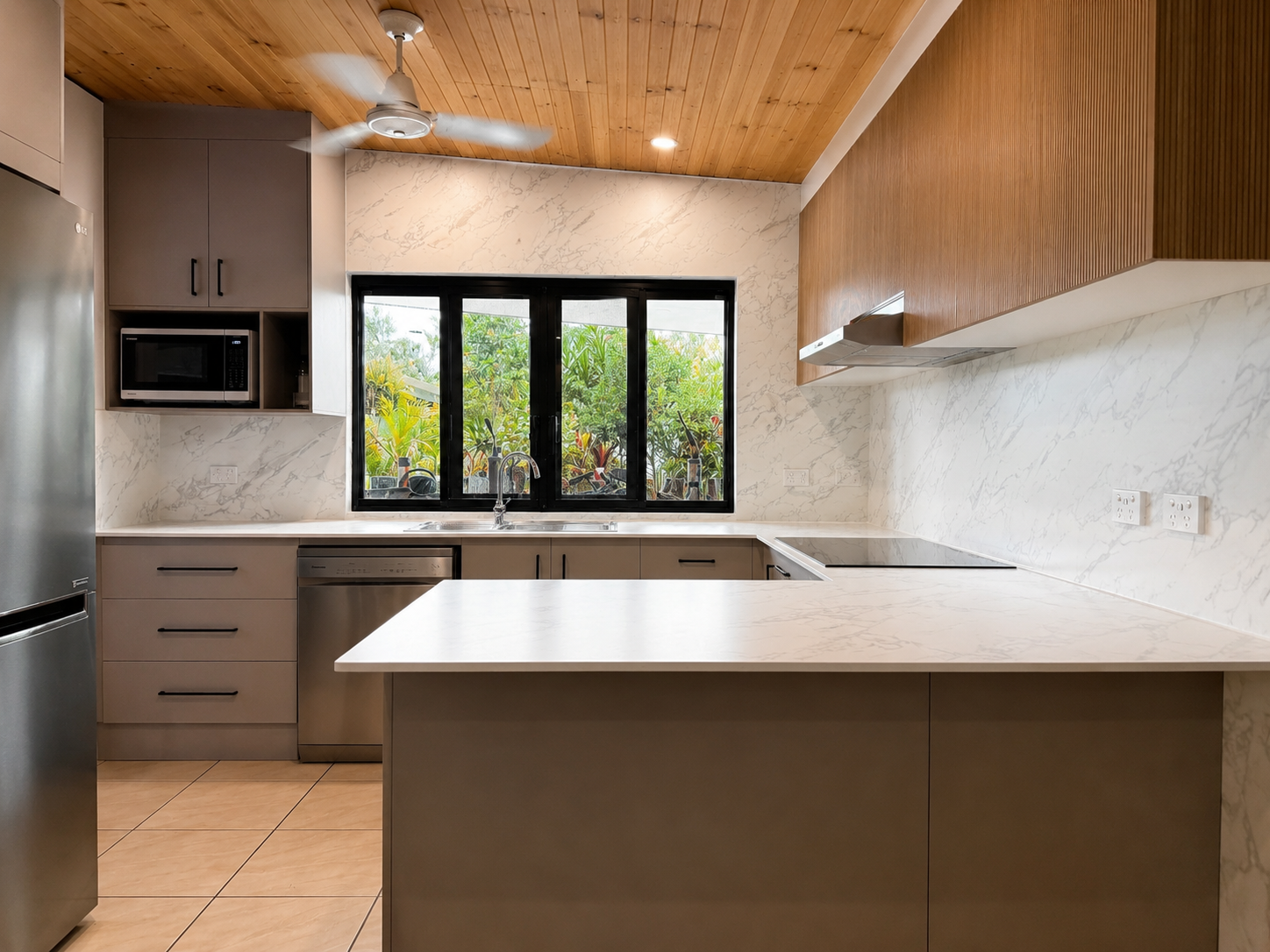
The kitchen is the most used room in any home. So, when it comes to your rental property, the more modern and updated your kitchen is, the more opportunities there are to maximise your rental income. So, if you’re looking for ways to spruce things up it’s always the best place to start.
Why does the kitchen matter most when renovating a rental property?
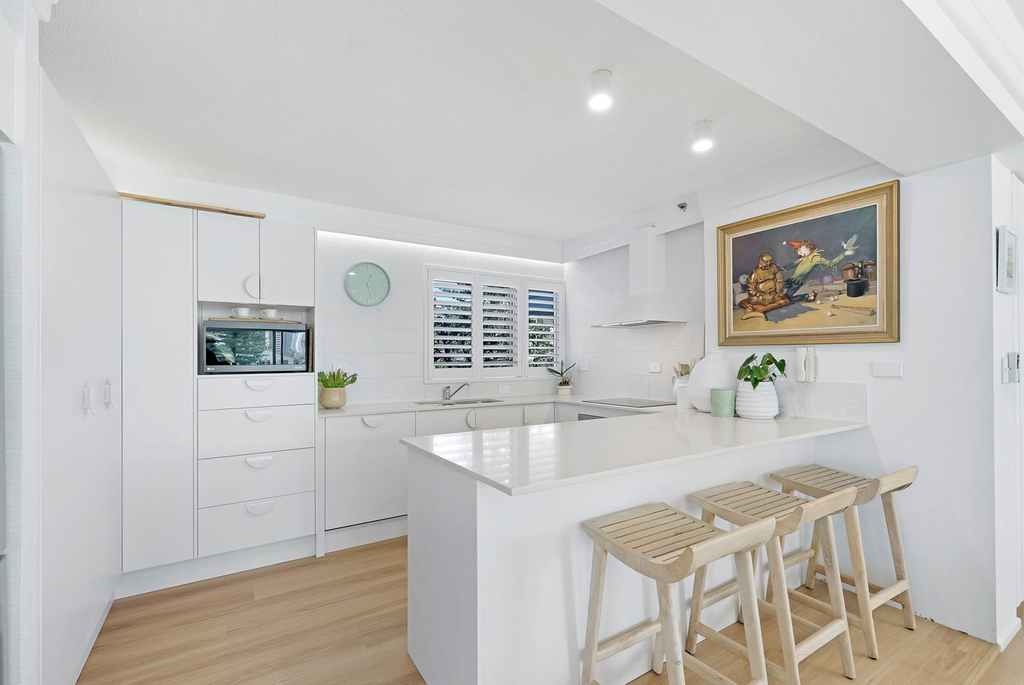
Rental supply in Australia is tight. SQM Research recorded a national residential vacancy rate of 1.3% in June 2026, with every capital city below 2%. That’s well under the 2.5–3.5% band generally considered a balanced market.
In conditions that tight, most rental properties will lease. But there’s a difference between leasing and leasing well. The properties that achieve a premium, attract multiple quality applications and spend the fewest days vacant are the ones that present properly. The kitchen carries more of that judgement than any other room in the home.
The Agency puts it plainly in its advice to landlords: kitchens sell properties. Their Inner West property management team estimates around 80% of the properties in their portfolio have undergone some form of renovation in the past eight years, and they consistently link better presentation to better-quality tenants who stay longer and look after the place.
The benefits go above tenant retention as well. Northern Beaches agency Cunninghams estimates a partial kitchen update at $8,000–$15,000, producing up to $100 per week in additional rent and recovering its cost in approximately 1.5 to 3 years. The Agency runs a comparable calculation: a $25,000 renovation lifting rent by $100 a week returns $5,200 annually, an ROI of about 20.8% per year on the capital spent.
One quick call before you price anything: ask your property manager what the property would achieve with an updated kitchen, and what comparable renovated places nearby are leasing for. That gap tells you what your budget should be.
What kitchen upgrades give the best return on investment?
When it comes to the upgrade itself, you don’t have to tear it all down and start from scratch. Minor but effective changes can save you $1,000s while making your space brand new.
1. Cabinet doors and drawer fronts: the biggest visual change per dollar
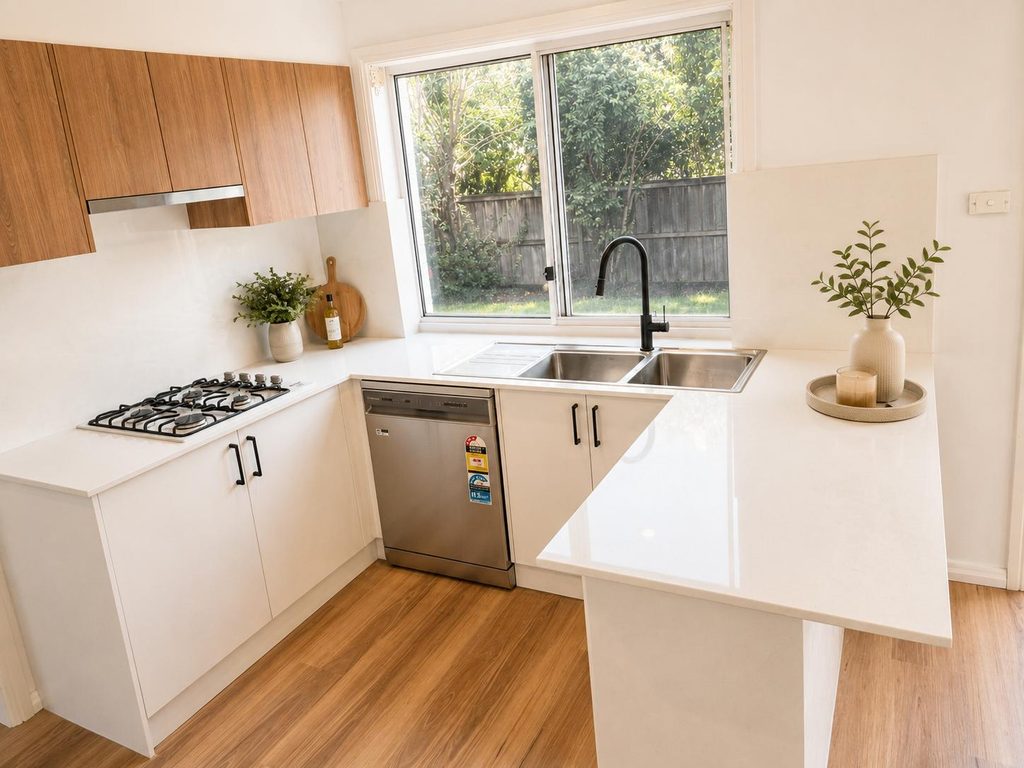
Cabinet doors and drawer fronts are the largest visible surface in a kitchen and the fastest way to move the room from dated to modern. This is what a prospective tenant photographs, remembers and compares against other properties.
For rental properties, matt and satin finishes in neutral tones are the safer bet. High gloss shows every fingerprint, and strong colours date quickly and narrow your applicant pool. Put neutral tones on the permanent surfaces and keep the trend-driven elements to things that are easier to change later.
2. Benchtops: the surface that dates a rental kitchen fastest
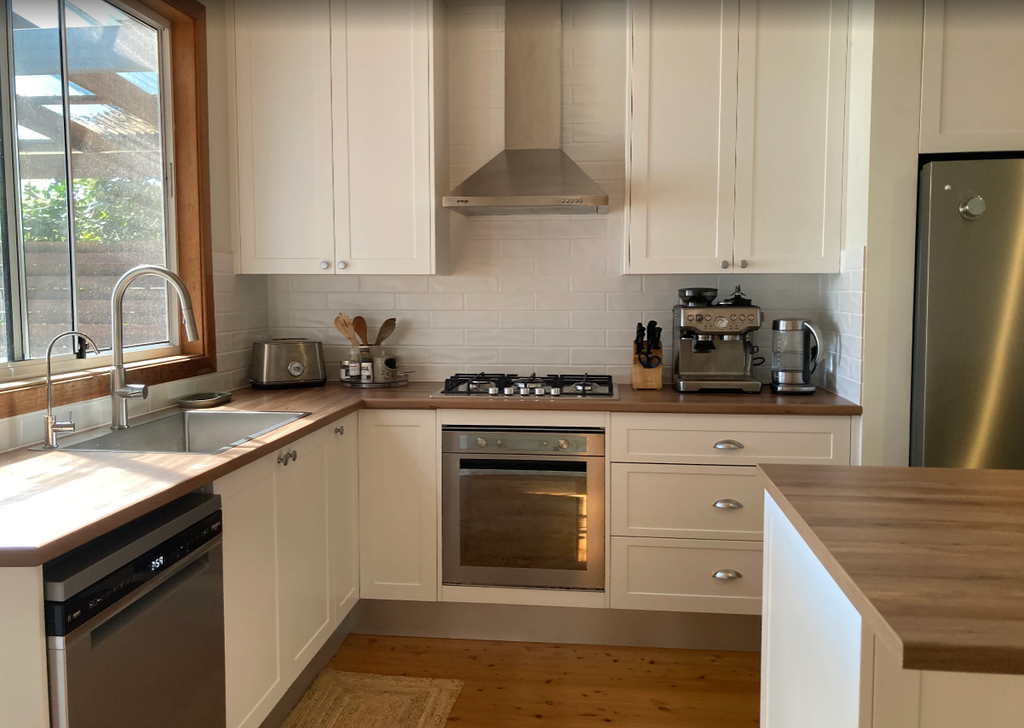
Nothing ages a kitchen faster than a scratched, stained or swollen benchtop, and nothing signals this landlord maintains the property faster than a new one.
Benchtop material matters more in a rental than in an owner-occupied home, because you’re not there to enforce chopping boards and coasters. Laminate has improved enormously and now convincingly imitates stone, timber and concrete at a modest price. Engineered stone is the step up for higher-end properties where the rent supports it. Either way, choose a surface that hides wear rather than one that photographs beautifully on day one and looks tired by the second tenancy.
3. Splashbacks: small area, outsized effect
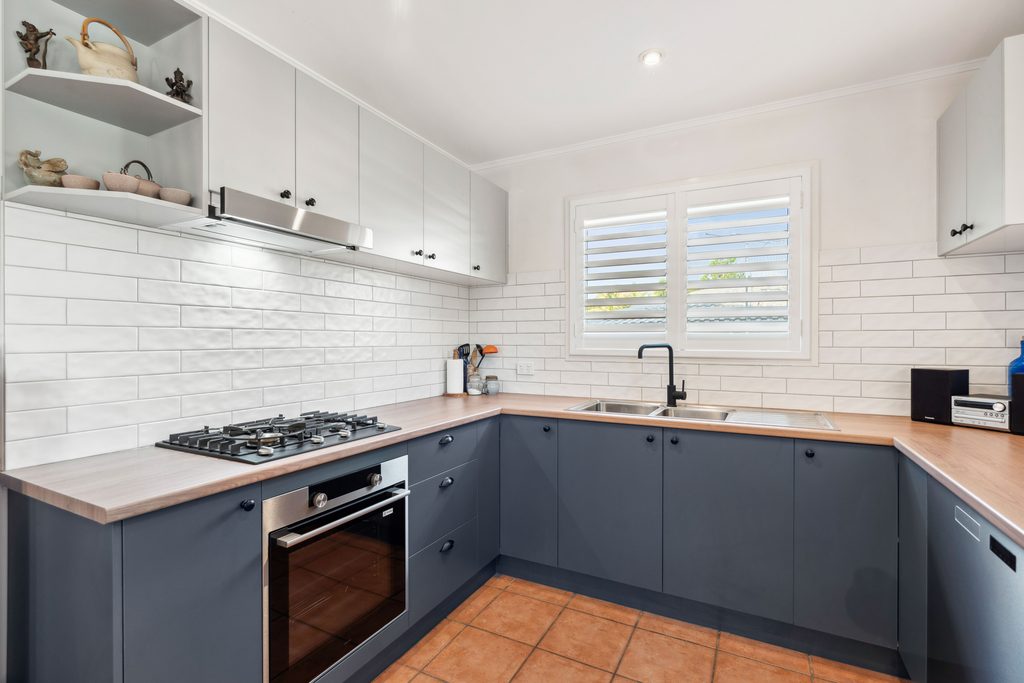
A splashback occupies very little of a kitchen but disproportionately affects how current the room looks. A dated tiled splashback that’s patterned, discoloured, or grouted in an old colour will undermine an otherwise good kitchen.
A single glass panel or a clean tile format modernises the space immediately and, usefully for a rental, wipes down in one pass with no grout to scrub.
4. Handles and hardware: cheapest upgrade, highest impact
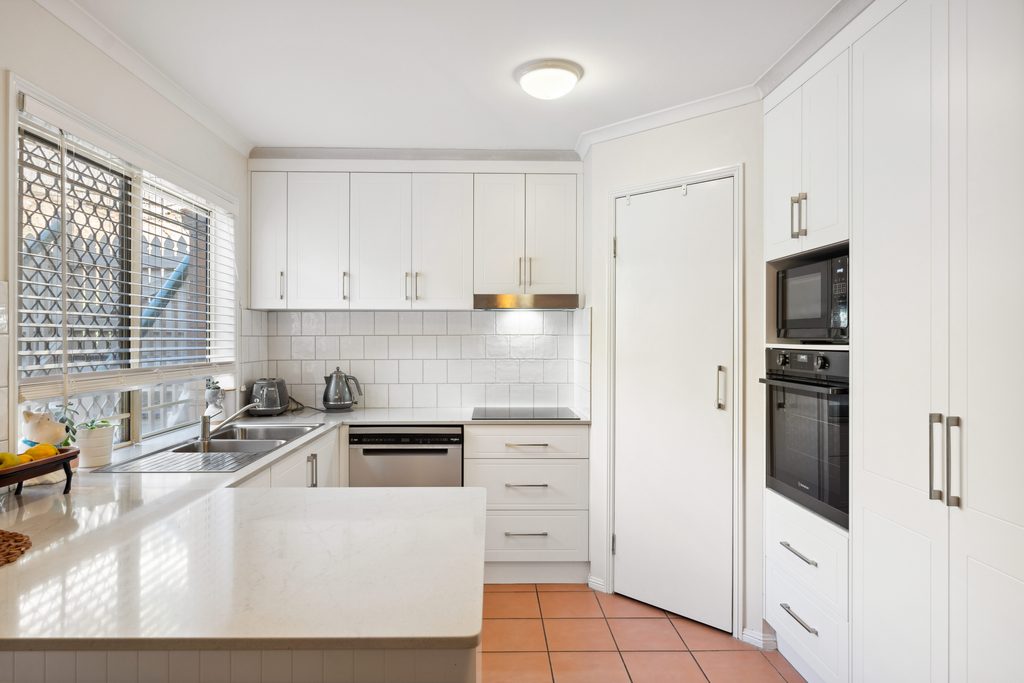
Handles, hinges and drawer runners are the cheapest items to replace in a kitchen renovation and the ones tenants physically interact with a hundred times a week. New handles alone lift the look of the room. New soft-close hinges and drawer runners change how the kitchen feels and registers at an inspection.
Hardware is also a maintenance decision. Failed drawer runners are among the most common call-outs in an older rental kitchen. Replacing them with quality components takes a recurring problem off your property manager’s list and out of your annual costs.
5. Storage and cabinet interiors: what tenants notice
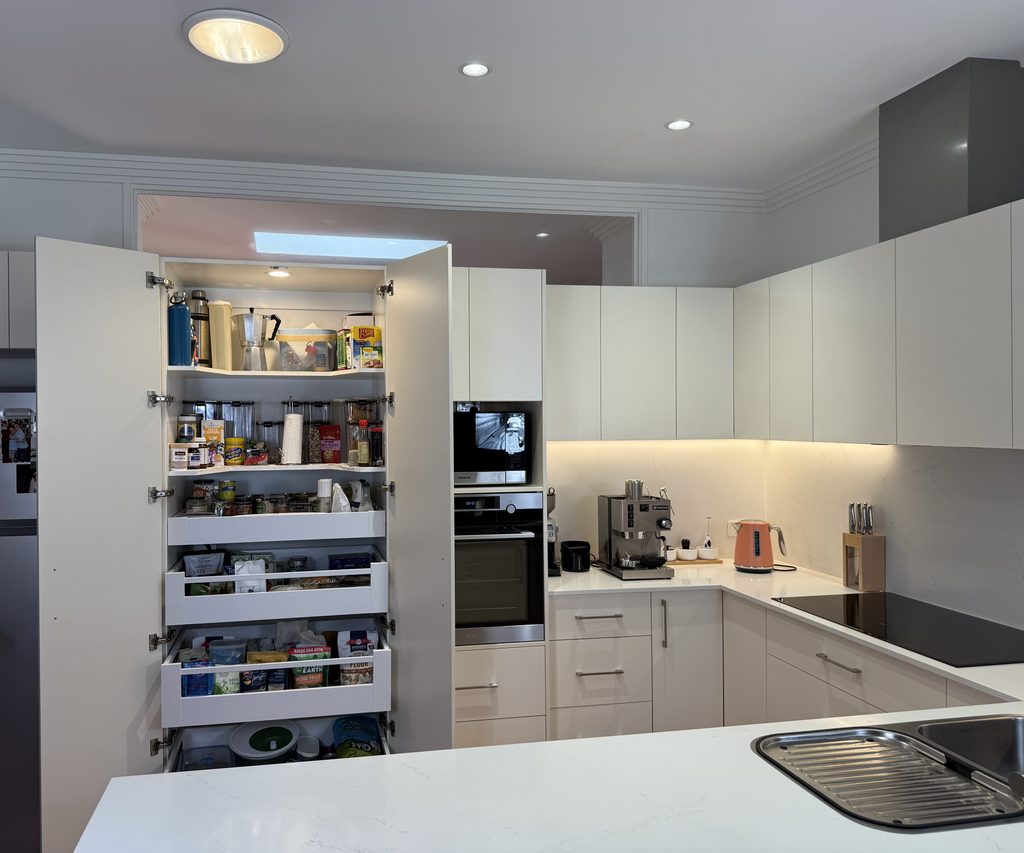
Storage sits consistently near the top of what tenants say they want, and it’s what older kitchens do worst. Real estate companies rank storage among the most cost-effective improvements a landlord can make. Usefully for a budget renovation, the inside of a cabinet can be transformed without touching the room around it.
Deeper drawers replacing a shallow one. Pull-out pantry systems. Wire baskets. Corner units that swivel out so the back of the cupboard is more reachable. In a small kitchen these changes do more for daily liveability than anything cosmetic, and liveability is what drives lease renewals.
6. Sinks and tapware: removing a whole category of maintenance call
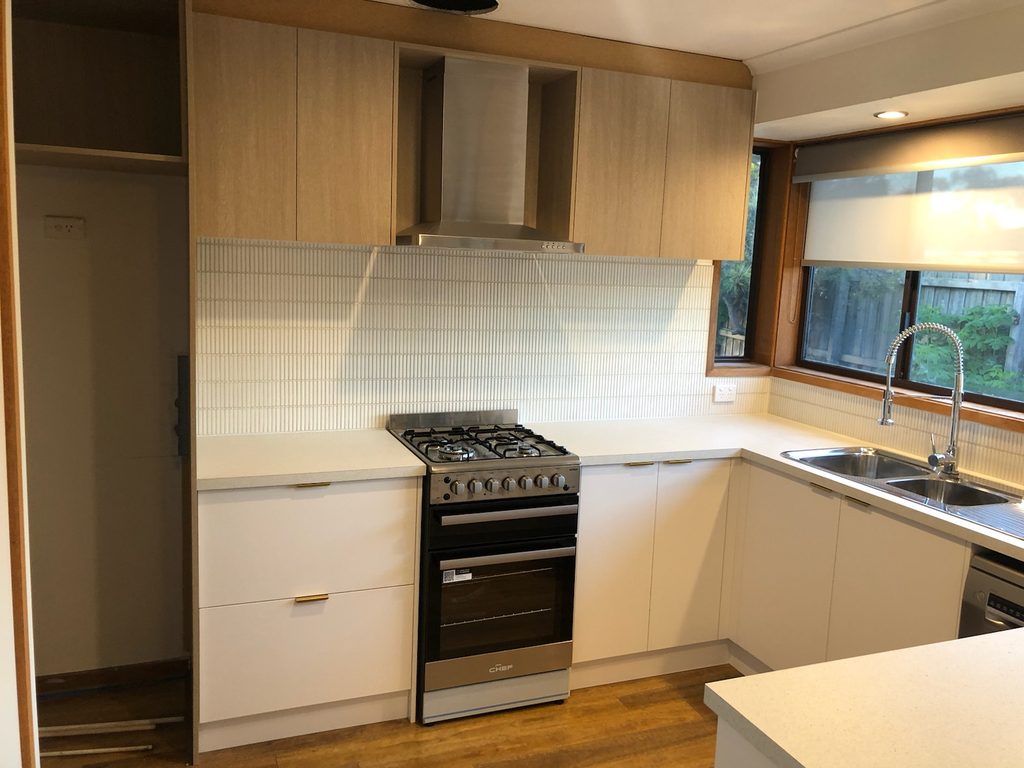
A stained sink and a dripping mixer are two of the most common complaints in older rental kitchens. A new sink and a modern tap with decent reach are inexpensive, and they remove a whole category of maintenance request before it starts.
7. Small layout changes: adding a cabinet or fitting a dishwasher
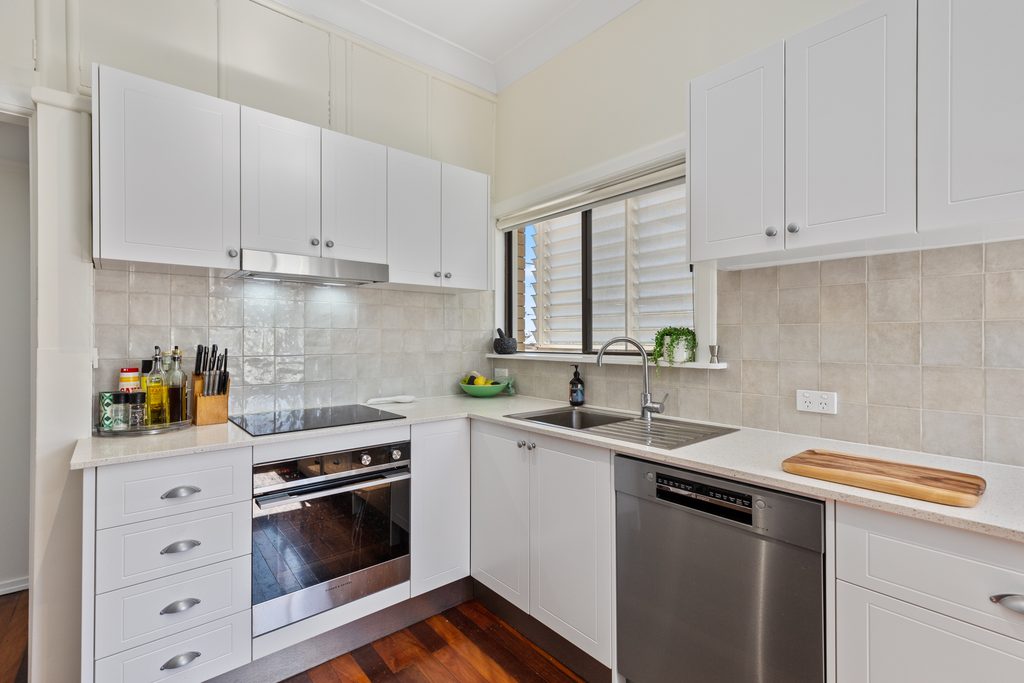
A budget kitchen renovation doesn’t have to be cosmetic only. Adding a cabinet, repositioning one, or creating space for a dishwasher where there wasn’t one are all achievable without rebuilding the room.
Dishwashers matter more than their cost suggests. Dishwashers are increasingly expected by tenants, particularly in family homes, and older properties units without dishwashers or built-in storage often lose applicants to better-equipped properties.
Getting started on your rental kitchen renovation
If your investment property’s kitchen has a workable layout and sound cabinets but looks fifteen years old, you can almost certainly lift its rental income without a full rebuild. New doors and drawer fronts, a new benchtop, a fresh splashback and hardware that actually works will do the overwhelming majority of the job.
That’s the approach Dream Doors Kitchens has built its business on. We’re Australia’s kitchen facelift specialists, with more than 50 locally owned businesses across the country, over 20,000 kitchens completed, doors and benchtops made to measure by Australian manufacturers, and a 10-year warranty behind the work.
The kitchen is where the return is largest, but it isn’t the only room the approach suits. Bathroom vanities, laundry cabinetry and built-in wardrobes can all be updated the same way — new fronts, new benchtops, new hardware. If you’re refreshing a property between tenancies, it’s worth pricing them together.
Book a free consultation with your local Dream Doors Kitchens team, or call 1800 373 263.
What kitchen upgrades give the best return on investment?
How much does it cost to renovate a rental property kitchen in Australia?
Australian agency guidance commonly puts a partial kitchen update at $8,000–$15,000, according to Cunninghams’ 2025 advice for landlords. Costs stay at the lower end when the existing layout and cabinet structure are retained and spending is focused on doors, benchtops, splashbacks and hardware. Full rebuilds involving new cabinetry and relocated services run substantially higher.
Is renovating a rental property kitchen worth it?
Generally yes, when scoped to the local market. Australian agency estimates place the rental uplift from a kitchen update at up to $100 per week, with cost recovery in approximately 1.5 to 3 years. The financial risk isn’t renovating, it’s renovating beyond what your suburb’s rental market will pay for.
What should I prioritise on a limited budget?
Cabinet doors and drawer fronts first, then the benchtop, then the splashback and hardware. Those four changes account for the overwhelming majority of the visible difference in a kitchen and can usually be done without touching the layout, the plumbing, or the electrical work.
Can I renovate a rental kitchen with a tenant living in the property?
Often, yes — particularly where there’s no major demolition and the installation window is short. It requires proper notice and coordination through your property manager. With a Dream Doors Facelift, installation can be completed in 3-5 days.
Should I choose neutral or on-trend finishes for a rental property?
Neutral. Rental properties are leased by a wide range of people with different tastes, and permanent surfaces committed to a trend will date quickly. Keep cabinetry and benchtops broadly appealing, and let tenants bring the personality.
How long does a rental kitchen renovation take?
It depends entirely on scope. A full rebuild involving demolition, new cabinetry and relocated plumbing commonly runs six to twelve weeks. Work that retains the existing cabinet structure and replaces the visible surfaces is much faster — Dream Doors Kitchens completes most installations in 3-5 days.